
Tissue Paper Manufacturing Business in Nigeria: How to Tap Into the Growing Hygiene Products Market
Discover the opportunities in Nigeria's tissue paper manufacturing industry. Learn how toilet rolls, serviettes and facial tissues are produced, who buys them, how to compete and what entrepreneurs should know before entering this everyday consumer products market.
By FeasibilityAfrica Research Team · · 14 min read
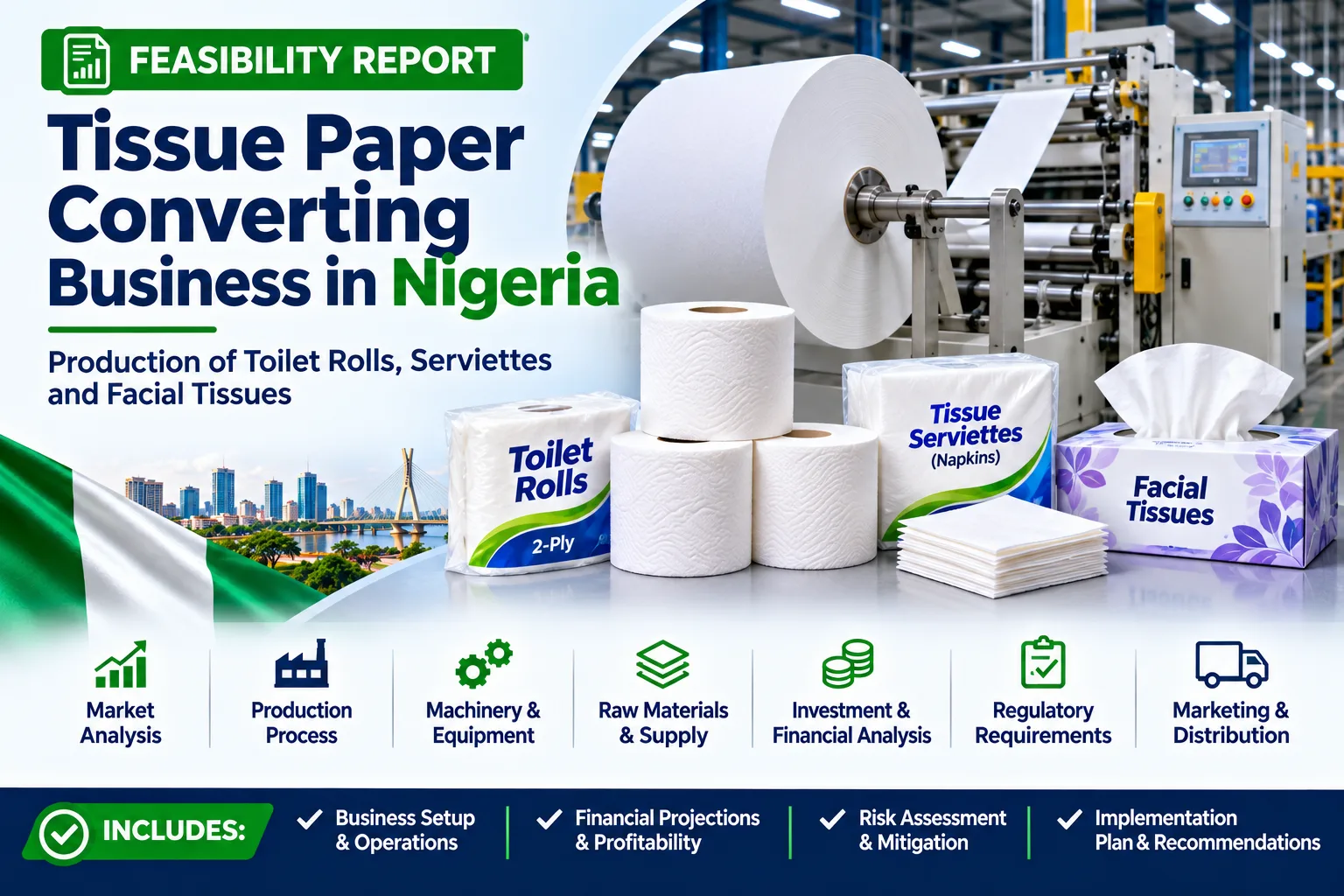
What if you could manufacture a product that households, hotels, restaurants, hospitals, offices and schools need almost every day?
Unlike fashionable products whose demand can disappear when consumer preferences change, tissue paper serves a basic and recurring need. People use it at home, at work, in restaurants, during travel and in countless other everyday situations.
From toilet rolls and kitchen towels to facial tissues and table napkins, tissue paper products have become an important part of modern hygiene and household consumption.
Yet, despite the widespread use of these products in Nigeria, there is still room for manufacturers who can deliver consistent quality, competitive pricing and reliable distribution.
For entrepreneurs exploring manufacturing opportunities, this raises an interesting question:
Could tissue paper manufacturing be one of the consumer goods businesses worth investing in Nigeria?
Let's explore the industry, the business models, the market opportunities and what it takes to build a competitive tissue paper brand.
1. Why Tissue Paper Is an Attractive Consumer Products Business
One of the most appealing characteristics of tissue paper is its recurring demand.
Think about how frequently tissue products are purchased by different categories of consumers.
A household may regularly purchase toilet rolls and facial tissues. A restaurant needs table napkins. A hotel requires toilet rolls and facial tissues for its rooms. Hospitals, schools, offices and shopping centres also consume tissue products continuously.
This creates a broad customer base rather than dependence on one particular industry.
Some of the strongest demand drivers include:
Population growth: More households and consumers create opportunities for everyday hygiene products.
Urbanisation: Growing towns and cities increase demand from households, restaurants, offices, hotels and commercial establishments.
Hygiene awareness: Greater attention to personal and environmental hygiene supports the use of disposable tissue products.
Hospitality industry growth: Hotels, guest houses, restaurants and event centres require regular supplies of tissue products.
Institutional consumption: Hospitals, schools, corporate offices and other organisations purchase tissue products in significant quantities.
For manufacturers, the attraction is the possibility of developing a business supported by repeat purchases and multiple distribution channels.
2. Understanding the Different Tissue Paper Products
The tissue paper industry offers several product categories. Each has different customer preferences, packaging requirements and commercial opportunities.
Understanding these differences is important when deciding which products to manufacture.
Toilet rolls
<AsyncImage query="premium white two ply toilet tissue rolls stacked product photography" aspectRatio="16:9" width="100%"/>
Toilet rolls are among the most familiar tissue products.
They are purchased by households, hotels, restaurants, hospitals, schools and offices.
Manufacturers can offer different product configurations, including:
- Single toilet rolls.
- Two-ply toilet rolls.
- Jumbo toilet rolls.
- Economy toilet rolls.
- Premium soft toilet rolls.
The market accommodates different price points, making it possible to develop products for both budget-conscious and premium consumers.
Serviettes and table napkins
<AsyncImage query="white paper serviettes folded table napkins neatly stacked product photography" aspectRatio="16:9" width="100%"/>
Serviettes are widely used in restaurants, hotels, fast-food outlets, catering businesses and households.
They are particularly interesting because businesses that serve food can require continuous supplies.
A manufacturer can develop different pack sizes and quality grades for retail and institutional customers.
Facial tissues
<AsyncImage query="white facial tissue paper box soft tissues product photography" aspectRatio="16:9" width="100%"/>
Facial tissues are commonly sold in boxes or soft packs.
They appeal to households, offices, hotels, hospitals and consumers who prefer convenient personal hygiene products.
They can also provide opportunities for attractive packaging and premium brand positioning.
Kitchen towels
<AsyncImage query="white embossed kitchen paper towel rolls on kitchen counter product photography" aspectRatio="16:9" width="100%"/>
Kitchen towels are designed for household and commercial cleaning applications.
They can be positioned as a higher-value product for supermarkets, hospitality businesses and modern households.
A new manufacturer does not necessarily need to launch every category immediately. Starting with a focused product range allows the business to understand customer demand and develop operational consistency.
3. An Important Distinction: Tissue Paper Manufacturing vs Tissue Paper Converting
Many people use the term tissue paper manufacturing to describe every business involved in producing toilet rolls and similar products.
However, there are two significantly different industrial models.
Primary tissue paper manufacturing
This involves producing tissue paper itself from pulp or other suitable fibrous raw materials.
The process requires large-scale industrial infrastructure, specialised paper-making machinery, substantial energy and water resources, and significant capital investment.
It is generally more suitable for large industrial investors.
Tissue paper converting
This is a different business model.
Instead of producing paper from pulp, a converter purchases large jumbo tissue reels, also known as parent rolls, and transforms them into finished consumer products.
The jumbo reels are processed into toilet rolls, serviettes, facial tissues and other products through operations such as unwinding, embossing, perforating, rewinding, cutting and packaging.
This model offers a more accessible entry point into the tissue products industry.
An entrepreneur can establish a converting factory without having to build a complete paper mill.
The distinction is important because the machinery, capital requirements, technical skills and operational arrangements are completely different.
For many new investors in Nigeria, tissue converting is the more practical business model to investigate.
4. How Are Toilet Rolls and Other Tissue Products Made?
The production process depends on the product being manufactured, but a typical tissue converting operation follows several stages.
Step 1: Purchasing jumbo tissue reels
The factory purchases large parent rolls from tissue paper manufacturers or other approved suppliers.
These jumbo reels serve as the main raw material.
Their quality has a direct impact on the finished product.
Important characteristics include paper softness, thickness, strength, absorbency and consistency.
Step 2: Unwinding
The jumbo reel is mounted onto a converting machine.
The tissue paper is gradually unwound and fed into the production system.
Step 3: Embossing
For products requiring embossing, the paper passes through specially designed rollers that create patterns on its surface.
Embossing can improve product appearance and influence perceived softness and bulk.
Step 4: Perforation
For toilet rolls, perforation creates the small tear lines that allow consumers to separate individual sheets.
The spacing and consistency of the perforations are important aspects of product quality.
Step 5: Rewinding
The tissue paper is wound around cardboard cores to produce smaller rolls.
The machine controls the roll diameter, tightness and number of sheets according to the product specification.
Step 6: Cutting
Large tissue logs are cut into individual toilet rolls of the required width.
For serviettes and facial tissues, different folding and cutting arrangements are used.
Step 7: Packaging
Finished products are packed into polyethylene film or other appropriate packaging materials.
They may be sold individually or in multipacks.
Step 8: Quality inspection and dispatch
Finished products are inspected for dimensions, weight, packaging integrity, appearance and other relevant quality characteristics before being dispatched.
Consistency is critical. Customers should not receive one pack of soft, properly sized tissue rolls today and a completely different product tomorrow.
5. Where Do Tissue Paper Manufacturers Get Their Raw Materials?
For a tissue converting business, the most important raw material is the jumbo tissue reel.
These reels can be sourced from local tissue paper producers or imported from international suppliers.
The choice of supplier can significantly influence the business's competitiveness.
Local sourcing
Purchasing from Nigerian tissue paper producers can offer advantages such as:
- Reduced international shipping exposure.
- Potentially shorter procurement lead times.
- Easier communication with suppliers.
- Reduced exposure to certain import-related complications.
However, local availability, quality specifications, pricing and supply capacity must be verified.
Importation
Imported jumbo reels provide access to different grades, specifications and supplier options.
However, importation exposes the business to additional considerations, including:
- Foreign exchange fluctuations.
- International freight.
- Port charges.
- Customs clearance.
- Inland transportation.
- Shipment delays.
A manufacturer that depends entirely on one source may face serious problems when that supplier experiences shortages or increases prices.
Developing alternative sourcing arrangements is therefore an important part of managing the business.
Other materials required include:
- Cardboard cores.
- Packaging film.
- Cartons.
- Labels and printed materials.
- Adhesives and other production consumables.
The objective should be to maintain consistent raw material quality without allowing procurement costs to destroy the product's profit margin.
6. Who Buys Tissue Paper in Nigeria?
One of the advantages of the tissue paper business is the diversity of potential customers.
Rather than depending exclusively on individual households, manufacturers can sell through wholesalers, distributors and institutional buyers.
Wholesalers and distributors
These are important channels for reaching thousands of retail outlets.
A manufacturer can supply major wholesalers who distribute products to supermarkets, provision stores, open markets and smaller retailers.
Hotels and hospitality businesses
Hotels, guest houses, serviced apartments and resorts require toilet rolls, facial tissues and other hygiene products.
Some establishments prefer suppliers who can deliver consistently and provide products under agreed specifications.
Restaurants and catering businesses
Restaurants, fast-food outlets, event centres and catering companies are regular users of serviettes.
Their demand can create opportunities for repeat commercial orders.
Hospitals and healthcare facilities
Healthcare facilities require tissue products for different applications.
Suppliers must pay particular attention to the specific quality and procurement requirements of these customers.
Corporate offices and institutions
Offices, schools, shopping centres and other institutions purchase tissue products for employees, visitors and facilities.
Supermarkets and retail chains
Modern retail outlets provide opportunities for brand visibility and access to consumers willing to compare different products.
However, entry into these channels may involve listing requirements, packaging standards, payment terms and promotional expenses.
7. Can a New Nigerian Brand Compete With Established Tissue Paper Companies?
This is perhaps the biggest concern for someone considering entering the industry.
The Nigerian market already has established brands and manufacturers with significant production and distribution capabilities.
Competing directly with a large integrated producer on price alone can be difficult.
However, a new business does not necessarily have to follow the same strategy.
There are several ways to establish a competitive position.
Consistent product quality: Many customers value tissue products that have predictable thickness, softness, sheet count and strength.
Reliable availability: Wholesalers and institutions need suppliers who can deliver when required.
Regional market focus: Rather than attempting nationwide distribution immediately, a new brand can establish itself in selected states and expand gradually.
Institutional contracts: Hotels, restaurants, offices and other commercial customers may offer opportunities for recurring supply agreements.
Private-label production: Some businesses may prefer to sell tissue products under their own brand rather than develop a manufacturing facility.
Product differentiation: Packaging, roll size, ply, softness and product presentation can help distinguish a brand from competitors.
The most important principle is to understand which customers you intend to serve before deciding what products to manufacture.
8. Why Packaging and Branding Matter More Than You Think
Tissue paper may appear to be a simple product, but packaging can strongly influence purchasing decisions.
Consider two toilet roll products with similar specifications.
One is presented in poorly printed, unattractive packaging. The other has professional branding, clear product information and appealing presentation.
Even if their underlying quality is similar, consumers may perceive the second product as more trustworthy.
Good packaging should communicate:
- Brand identity.
- Number of rolls.
- Ply specification.
- Sheet or roll information where applicable.
- Manufacturer details.
- Relevant regulatory information.
- Storage and handling instructions where necessary.
For premium products, packaging can become an important part of the value proposition.
For economy products, the objective may be to communicate affordability and practicality.
Manufacturers should also ensure that packaging materials protect the tissue from moisture, dust and contamination during transportation and storage.
9. The Importance of Location in Tissue Paper Production
A tissue converting factory needs to be positioned strategically.
Unlike fresh agricultural products, jumbo tissue reels can be stored and transported over longer distances. However, their weight and volume make logistics a significant cost consideration.
A good factory location should provide:
- Access to jumbo reel suppliers.
- Reliable road connections.
- Proximity to major consumer markets.
- Suitable industrial premises.
- Adequate electricity infrastructure.
- Access to skilled and semi-skilled labour.
- Appropriate security arrangements.
The South-West has an established industrial ecosystem and proximity to the major Lagos ports, which can be advantageous for businesses importing jumbo reels.
Other regions can offer attractive market opportunities, particularly where there is strong institutional demand and established distribution networks.
A manufacturer targeting Northern Nigeria, for example, may benefit from developing a distribution network that serves multiple states from a strategically selected production or warehousing location.
The best location is not necessarily the one with the cheapest rent. It is the one that provides the best overall balance of procurement, production and distribution costs.
10. Power Supply: One of the Biggest Operational Considerations
Tissue converting machinery requires reliable electricity.
Production lines incorporate motors, cutting equipment, rewinding systems, compressors and packaging machinery.
Voltage fluctuations and unexpected power interruptions can affect production efficiency and increase equipment maintenance requirements.
In Nigeria, manufacturers must carefully consider their electricity strategy.
Possible arrangements include:
- Reliable grid electricity.
- Diesel generator backup.
- Gas-powered generation.
- Solar hybrid systems for suitable loads.
- Energy-efficient motors and production equipment.
The most appropriate solution depends on factory capacity, operating hours, machinery configuration and local electricity availability.
Energy should be evaluated as part of the overall production economics, not simply as a utility expense.
11. What Are the Major Challenges in the Tissue Paper Business?
Although the industry offers interesting opportunities, several challenges can affect the performance of a new manufacturer.
Raw material price fluctuations
Jumbo reels are the primary input. Changes in international prices, foreign exchange and local supply conditions can affect production costs.
Competition
Established manufacturers may benefit from economies of scale, established brands and extensive distribution networks.
Thin profit margins
Tissue converting is generally a volume-driven business. Small differences in raw material cost, waste, selling price and energy expenditure can significantly affect profitability.
Energy expenses
Diesel and other energy costs can place substantial pressure on manufacturing margins.
Working capital requirements
A manufacturer needs enough money to purchase jumbo reels, packaging materials and other consumables while also paying salaries and meeting operational expenses.
Product quality
Inconsistent roll weight, poor perforation, weak paper, irregular cutting and defective packaging can lead to customer complaints and lost sales.
Distribution and credit risk
Some distributors may request credit facilities. Poor credit management can create cash-flow difficulties even when sales appear strong.
These challenges make planning, cost control and operational management essential.
12. Can Tissue Paper Manufacturing Generate Multiple Revenue Streams?
Yes. One attractive feature of tissue converting is the opportunity to diversify the product portfolio using related production capabilities.
A business that begins with toilet rolls may later consider:
- Facial tissues.
- Table serviettes.
- Kitchen towels.
- Jumbo toilet rolls for commercial establishments.
- Specialised institutional tissue products.
- Private-label tissue products.
This creates opportunities to serve different customer segments and reduce dependence on a single product category.
There may also be opportunities to expand distribution into neighbouring states and develop dedicated institutional sales channels.
However, diversification should be guided by market demand, available machinery, production economics and working capital.
Launching too many products before establishing a stable core business can create unnecessary complexity.
13. Is the Tissue Paper Business Suitable for Small and Medium-Sized Investors?
The answer depends on which part of the industry you intend to enter.
A complete paper mill is a capital-intensive industrial undertaking.
A converting operation is a different proposition, but it still requires meaningful investment in machinery, raw materials, premises, power infrastructure and working capital.
Prospective investors should therefore distinguish between:
- Small-scale manual or semi-automatic converting.
- Medium-scale industrial tissue converting.
- Large-scale integrated tissue paper manufacturing.
Each model has different production economics and market requirements.
The right investment model depends on the entrepreneur's capital, target customers, access to raw materials and intended production capacity.
A business should not purchase a machine simply because its advertised price appears affordable. The complete cost of establishing and operating the production line must be considered.
14. The Secret to Building a Sustainable Tissue Paper Brand
A successful tissue paper business is built on more than machinery.
It requires coordination between procurement, production, quality control, branding, distribution and financial management.
Imagine having a factory capable of producing thousands of rolls every day but no reliable distributors to purchase them.
Or having several major customers but insufficient working capital to buy the jumbo reels required to fulfil their orders.
These situations demonstrate why the commercial strategy must be developed alongside the production strategy.
A sustainable manufacturer should focus on five priorities:
- Secure reliable jumbo reel suppliers.
- Produce consistent products that meet customer expectations.
- Develop dependable wholesale and institutional relationships.
- Control energy, labour, waste and logistics costs.
- Maintain adequate working capital to support continuous production.
The objective is to build a business that can manufacture efficiently, sell consistently and fulfil orders reliably.
15. Final Thoughts: Is This an Opportunity Worth Exploring?
Tissue paper is an everyday product with applications across households, businesses and institutions.
Nigeria's consumer market provides opportunities for manufacturers who can combine competitive pricing, consistent quality and effective distribution.
The conversion model also creates an opportunity to enter the industry without establishing a full-scale paper mill.
Nevertheless, the business should not be approached casually.
The cost of jumbo reels, machinery specifications, production capacity, energy consumption, product pricing and distribution arrangements all influence whether a tissue converting operation can succeed.
An investor who understands these variables before entering the market is better positioned to avoid expensive mistakes.
Ready to Start a Tissue Paper Manufacturing Business in Nigeria?
The difference between an attractive business idea and a successful manufacturing investment lies in understanding the practical requirements before committing capital.
How much should you invest? Which production line is appropriate? Where should you locate your factory? How will you source jumbo reels? Which products should you launch first? How do you compete with established manufacturers? And what level of production and sales is required to achieve financial sustainability?
These are questions every serious investor should answer before establishing a factory.
Our Tissue Paper Converting Business Feasibility Report in Nigeria (2026) provides a comprehensive examination of the commercial, technical, operational and financial considerations involved in setting up a tissue converting business.
Whether you are an entrepreneur looking to establish your first manufacturing company or an investor exploring opportunities in Nigeria's FMCG sector, the report will help you examine the business in greater depth.
Don't just see the demand for tissue paper. Discover what it takes to build a business that supplies that demand profitably.
Get your copy of the Tissue Paper Converting Business Feasibility Report in Nigeria today and take a more informed step towards your manufacturing investment.
Enjoyed this? Get the next one free
Every new article, straight to you. Free. Choose email, WhatsApp — or both.
Email newsletter
New articles in your inbox. Unsubscribe anytime.
WhatsApp newsletter
Get new articles directly on WhatsApp. No spam, just new ideas.
Related articles
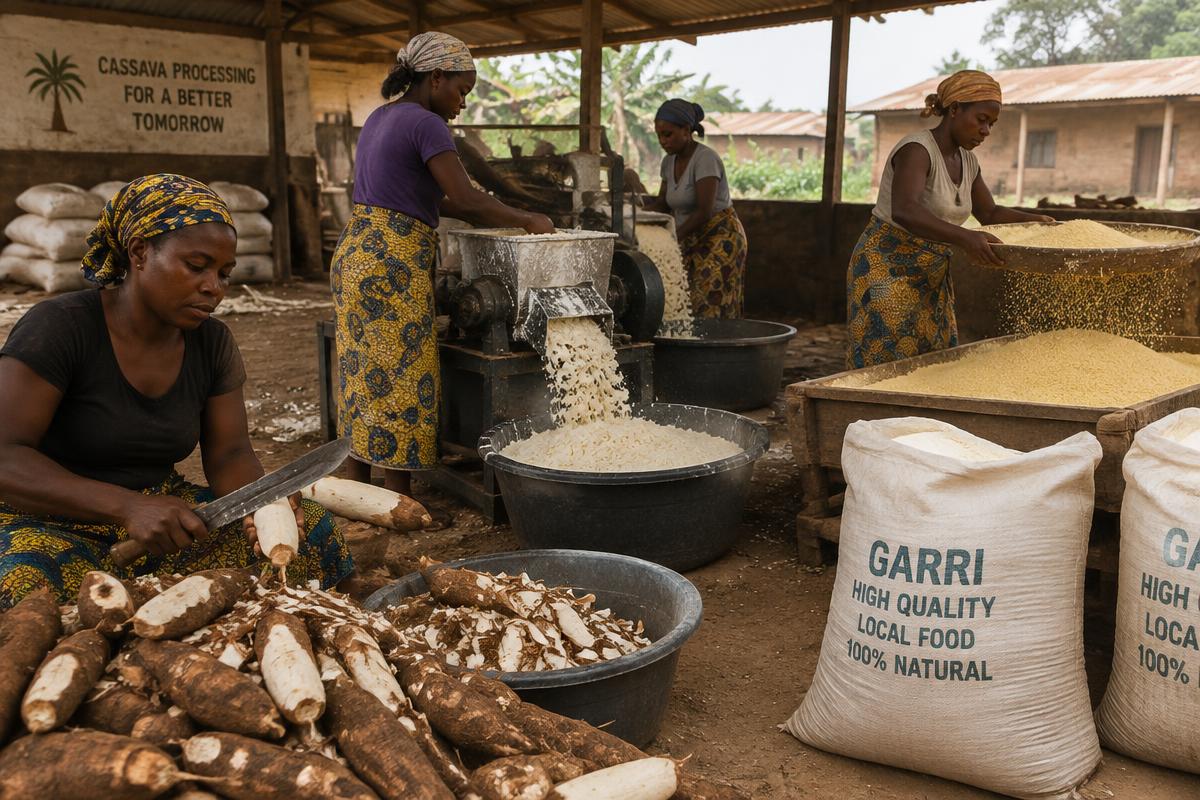
Manufacturing
Starting a Garri Processing Business: A Step-by-Step Guide
Machinery, raw material sourcing and why processed cassava beats raw cassava on margin.
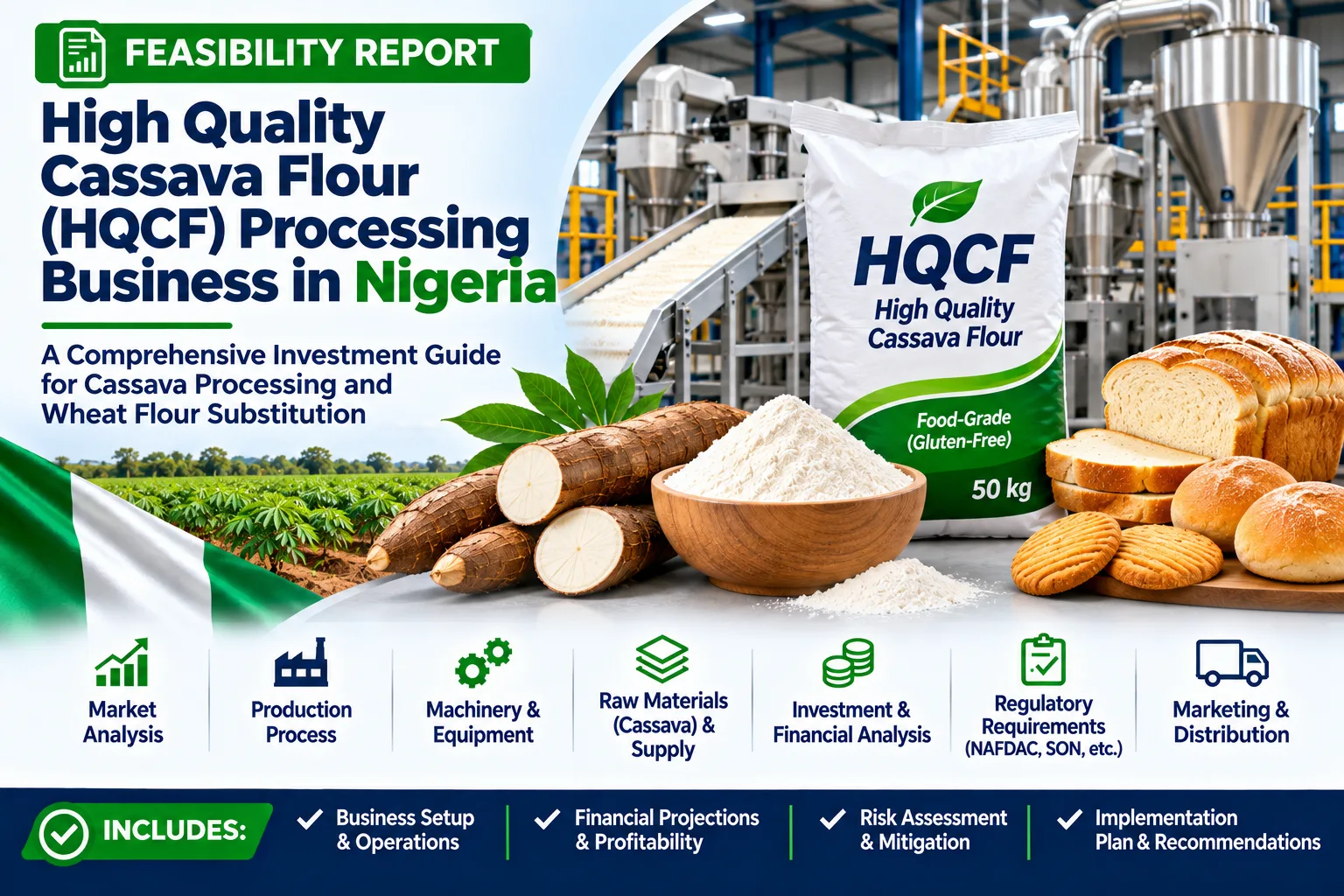
Manufacturing
High Quality Cassava Flour Processing in Nigeria: Turning Cassava into a Valuable Industrial Food Ingredient
Nigeria produces enormous quantities of cassava, yet converting this versatile crop into high-value industrial food ingredients remains a significant opportunity. Discover how High Quality Cassava Flour (HQCF) is produced, its applications in the food industry, potential customers, processing challenges and what investors should understand before entering the market.
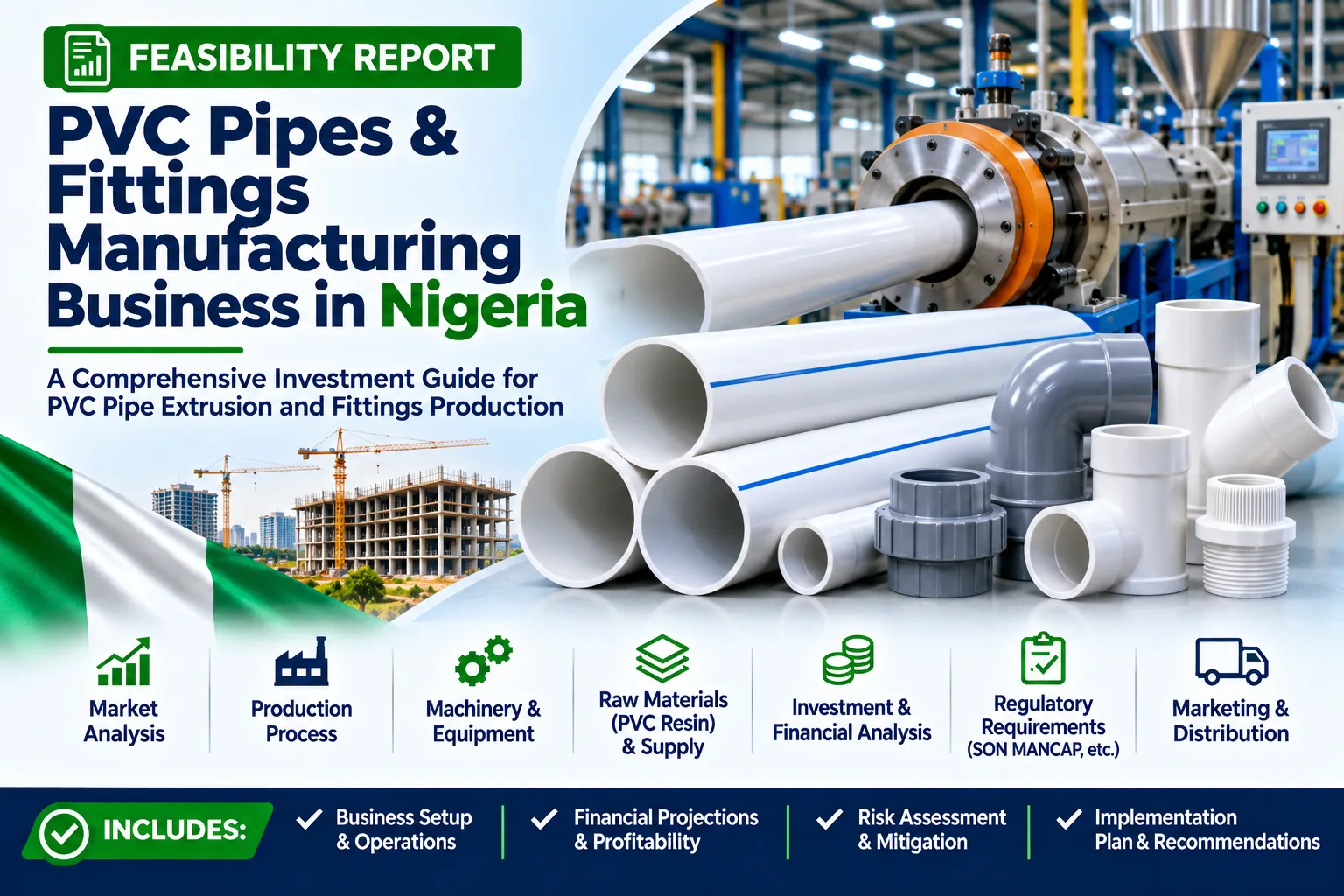
Manufacturing
PVC Pipes and Fittings Manufacturing in Nigeria: Exploring Opportunities in the Construction and Infrastructure Market
Nigeria’s demand for reliable plumbing, water supply, drainage and electrical conduit products creates opportunities for local manufacturers. Discover how PVC pipes and fittings are produced, the customers who need them, the challenges manufacturers face and what it takes to build a competitive brand in this growing industrial market.